
What Determines the Price of a Screw Conveyor
There is no single standard screw conveyor price in India. The quotation depends on the material handled, required capacity, conveying length, installation angle and construction. A useful offer also states the supply scope, including the drive, supports, controls and site work.
A price is easier to assess when the equipment specification is clear. Two offers described as industrial screw conveyors may include different components or cover different operating conditions. Start by defining the job, then compare the equipment proposed for it.
Which Configuration Does Your Process Need
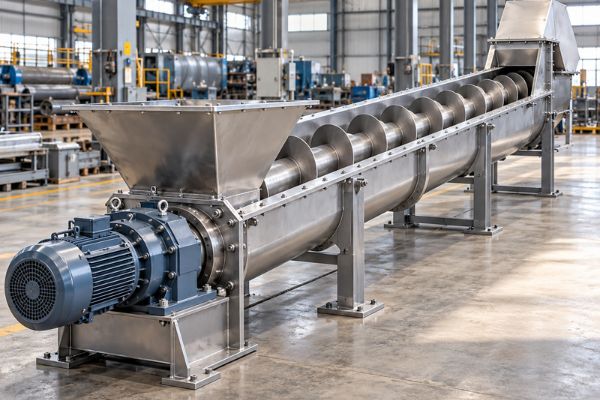
Forderin Reich offers horizontal and inclined arrangements, U trough and pipe trough housings, and live bottom designs. These describe different features, so one system may combine several options.
| Configuration | What to Discuss Before Requesting a Quote |
|---|---|
| Horizontal Arrangement | Conveying length, available space and inlet feed conditions |
| Inclined Arrangement | Lift height, installation angle and required output |
| U Trough Housing | Cover design, inspection access and bearing arrangement |
| Pipe Trough Housing | Material containment, cleaning access and connection dimensions |
| Live Bottom Design | Silo outlet geometry, material flow and feeding duty |
I am text block. Click edit button to change this text. Lorem ipsum dolor sit amet, consectetur adipiscing elit. Ut elit tellus, luctus nec ullamcorper mattis, pulvinar dapibus leo.
How Material Properties Change the Quote
Dry fly ash, damp biomass and abrasive mineral powder place different demands on a screw conveyor. Share bulk density, maximum particle size, moisture, temperature and abrasiveness so suitable components can be selected.
Capacity in tonnes per hour must be considered alongside bulk density because the conveyor also has a volume limit. Giving only the material name can leave the design based on assumptions. A material sample or test data may help resolve uncertain flow conditions.
How Capacity Length and Incline Affect the Design
Required throughput influences screw diameter, speed and drive selection. A longer route changes power requirements, support arrangements and the maintenance points that need access.
Inclined conveying also needs a separate assessment. Material can fall back as the angle increases, affecting output and power demand.
For example, two conveyors specified for 5 TPH may require different screw diameters and motors if their materials and installation routes differ. Compare the capacity promised for your actual application.
Which Construction and Drive Details Should Be Confirmed
Ask for the material of construction, screw and trough thickness, shaft arrangement, bearings and seals. Abrasive duties may need wear protection. For stainless steel equipment, confirm the grade, finish and contact surfaces included.
The drive should be sized for the operating duty. Motor power alone does not establish conveying capacity. A variable speed drive can support adjustable output, but the quotation should explain its purpose and operating range.
What Should a Complete Quotation Include
Request an itemised scope covering the conveyor, motor, gearbox, supports, inlet and outlet connections, guards and control requirements. Confirm GST, freight, packing, unloading, installation and commissioning separately.
Also check quotation validity, payment stages, warranty terms and delivery commitments. Ask for a drawing showing the equipment dimensions and connection points. Clear exclusions help your team calculate the total project cost before placing the order.
Why Running Costs Belong in the Buying Decision
Compare expected power demand, access for inspection and the availability of replacement parts. Bearing locations, cover access and screw removal space can affect maintenance effort.
Ask which components are likely to wear in your material service and how replacement parts are supplied. Include shutdown time and service access in the buying discussion. A lower purchase price can become expensive if routine repairs require extensive dismantling.
Request a Quotation for Your Plant
Forderin Reich manufactures screw conveyors in Ahmedabad for industrial applications across Gujarat and India. Share your material data, required throughput, conveying route, operating hours and plant layout to discuss a suitable configuration.
Request a quote that identifies the proposed equipment, design assumptions and supply scope. Providing these details gives both your purchasing team and the manufacturer a clearer basis for the order.
Conclusion
A useful screw conveyor quotation connects the price to a defined material, capacity and installation route. Confirm the construction, drive and complete supply scope, then assess maintenance and running costs. This gives buyers a practical basis for choosing equipment that fits the plant.
Frequently Asked Questions
A per metre price can help with early budgeting when specifications match. Confirm the drive, diameter, construction, connections and installation scope before treating it as a complete project price.
Provide drawings, photographs, dimensions, material details and operating capacity. Explain why replacement is needed, including wear or blockages, so the proposed equipment addresses the existing problem.
Ask for a provisional quotation with its assumptions clearly listed. Identify uncertain dimensions, capacity and connection details, then request a revised offer once the layout is confirmed.
Check the written scope. Equipment supply, transport, unloading, erection, wiring and commissioning may be separate items. Ask who handles each activity and what your plant must provide.
Share the expected future output and present operating range. Ask the manufacturer to assess both duties, including feeding conditions and control requirements, before choosing additional capacity.
Confirm the approved specification, drawing, payment milestones, delivery terms, warranty and acceptance requirements. Make sure the order records agreed changes and clearly identifies the equipment being supplied.
Ask about bearings, seals, drive components and material contact parts likely to wear. Confirm part identification, availability and replacement access so maintenance planning starts before delivery.