

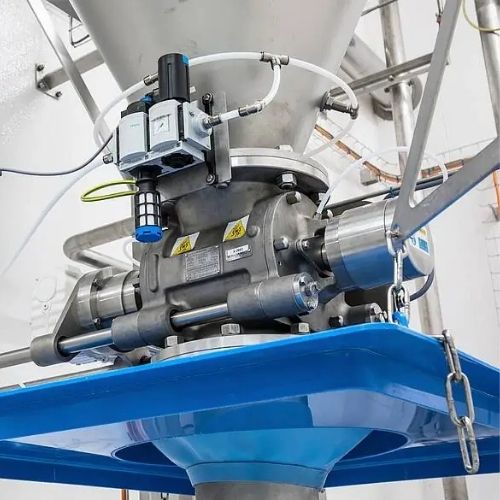
Forderin Reich Pvt. Ltd. is a Rotary Airlock Valve Manufacturer in India providing engineered valves for controlled discharge of powders, granules, cement, ash, coal and other bulk materials. Manufactured in Ahmedabad, Gujarat, our industrial rotary airlock valves help maintain material flow while limiting unwanted air leakage between different pressure zones.
Our rotary valves are suitable for pneumatic conveying systems, dust collectors, bag filters, cyclones, silos, hoppers and material feeding applications. Each valve can be selected according to material characteristics, required capacity, pressure differential, operating temperature and process conditions.
Share your material type, bulk density, required capacity and operating conditions with our engineering team to identify a suitable rotary airlock valve for your application.
What Is a Rotary Airlock Valve
A rotary airlock valve is a bulk material handling device that continuously transfers powders or granular materials between two areas while helping maintain a pressure or air seal. It is commonly installed below silos, hoppers, cyclones, bag filters and dust collectors, and at pneumatic conveying system feed points.
How Does a Rotary Airlock Valve Work
A rotary airlock valve uses a rotor with multiple pockets or vanes inside a closely fitted housing. Bulk material enters through the inlet, fills the rotor pockets and is carried around the housing before being discharged through the outlet. The controlled rotor clearance helps limit air leakage while allowing continuous material transfer.
Valve performance depends on factors including:
- Material bulk density
- Particle size
- Required feed rate
- Pressure differential
- Operating temperature
- Material abrasiveness
- Rotor speed
- Pocket fill efficiency
- Rotor and housing clearance
How to Select the Right Rotary Airlock Valve
Selecting the right rotary airlock valve requires more than choosing an inlet size. The valve should be selected according to material type, bulk density, particle size, abrasiveness, moisture, required capacity, pressure differential, operating temperature and installation conditions.
Information to Share With Our Engineering Team:
- Material name
- Bulk density
- Maximum particle size
- Required capacity in TPH or kg/hr
- Operating temperature
- Pressure or vacuum condition
- Upstream equipment
- Downstream equipment
- Inlet and outlet dimensions
- Continuous or intermittent operation
Rotary Airlock Valve vs Rotary Feeder
| Rotary Airlock Valve | Rotary Feeder |
|---|---|
| Primarily maintains an air or pressure seal while transferring material | Primarily controls material feed rate |
| Common in pneumatic conveying and dust collection | Common for controlled material feeding |
| Rotor clearance is important for air leakage | Feed consistency is a major requirement |
| Can perform both functions depending on design | May not always provide an effective airlock |
The Problem: Common Industrial Flow Control Challenges
How Forderin Reich Rotary Airlock Valves Solve These Problems
Rotary Airlock Valve Manufacturer in Ahmedabad Gujarat — Why Forderin Reich?
Forderin Reich is Industrial Rotary Airlock Valve Manufacturer in Ahmedabad, Gujarat for bulk material handling, dust collection and pneumatic conveying applications. Our engineering team can configure valve size, rotor arrangement, construction material and drive according to the material, capacity and operating conditions of plants across Gujarat and India.
What makes us different as a Bulk Material Handling Equipment Supplier?
Benefits of Rotary Airlock Valves
Reduced Energy Consumption
Precision sealing prevents air leakage and maintains system pressure, allowing your compressors to run more efficiently and consume less power. Energy savings compound significantly over time.
Improved Production Consistency
Fully enclosed design prevents spillage and material loss, keeping valuable materials contained and reducing cleanup costs and environmental hazards.
Extended Equipment Lifespan
Proper flow control and reduced pressure fluctuations put less stress on downstream equipment, reducing wear and extending the life of expensive machinery significantly.
Lower Maintenance Costs
Durable valve construction and superior seal quality reduce maintenance frequency and emergency repairs. Fewer breakdowns mean less downtime and lower operating expenses.
Better Material Handling Control
Precise flow regulation allows you to control material transfer rates exactly, enabling better production scheduling and reducing material waste from bridging or overflow.
Reduced Material Loss
Accurate valve operation minimizes leakage, overflow, and uncontrolled discharge during material transfer. This helps conserve valuable product, improves housekeeping, and reduces cleanup and disposal costs across the facility.
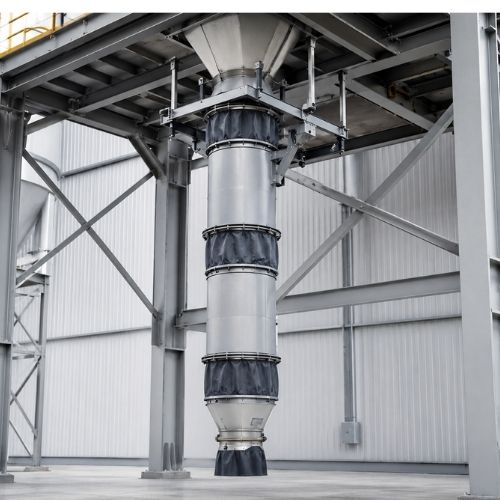
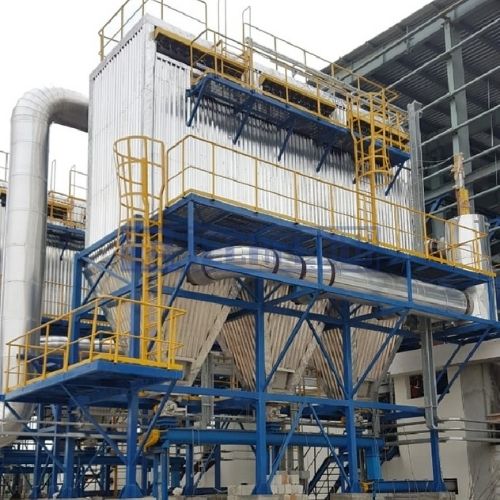
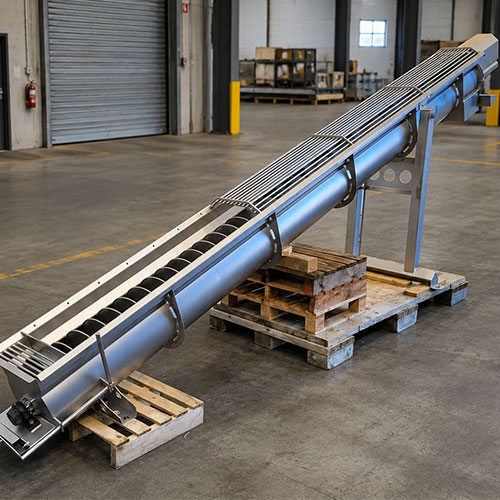
Applications of Rotary Airlock Valves in Industries


Key Features of Forderin Reich Rotary Airlock Valves
Frequently Asked Questions About Rotary Airlock Valves
Selecting the right rotary airlock valve depends on material type, bulk density, particle size, required capacity, pressure differential, operating temperature, abrasiveness and installation conditions. An experienced Rotary Airlock Valve Manufacturer in India can use these parameters to recommend the appropriate valve size, rotor design, construction material and drive configuration.
For an accurate quotation, provide the material name, bulk density, maximum particle size, required capacity, operating temperature, pressure or vacuum conditions, inlet and outlet sizes and operating hours. An Industrial Rotary Airlock Valve Manufacturer can then select or engineer a valve suited to the actual process instead of relying only on pipe or flange size.
A rotary airlock valve transfers bulk material while helping maintain an air or pressure seal between process zones, whereas a rotary feeder primarily controls the material feed rate. Depending on its design, one unit may perform both functions. A Rotary Feeder Valve Manufacturer should therefore select the configuration according to feeding accuracy and pressure-sealing requirements.
A Pneumatic Conveying Airlock Valve should be selected according to conveying pressure or vacuum, material bulk density, particle size, capacity, temperature and required air leakage control. Proper rotor design and clearance help transfer material into the conveying line while maintaining the required pressure difference.
A Dust Collector Rotary Airlock Valve is typically installed below a dust collector, bag filter, cyclone or hopper. The rotor continuously discharges collected material while helping limit unwanted air entering or leaving the system. Correct valve sizing is important for maintaining dust collection performance and reliable material discharge.
Rotary airlock valve sizing considers the required material flow rate, bulk density, rotor pocket volume, pocket fill efficiency, rotor speed, particle characteristics and pressure conditions. Buyers should provide actual process data rather than selecting a valve only by inlet diameter, because undersizing or oversizing can affect feeding performance and air leakage.
Forderin Reich is a Rotary Airlock Valve Manufacturer in Ahmedabad, Gujarat, supplying industrial rotary valve solutions for pneumatic conveying, dust collection and bulk material handling applications across India. Buyers should compare actual technical specifications, customization options, material compatibility, capacity, pressure requirements and engineering support before choosing a Rotary Airlock Valve Manufacturer in Gujarat.
Need the Right Rotary Airlock Valve for Your Process?
Looking for a reliable Rotary Airlock Valve Manufacturer in India for pneumatic conveying, dust collection or bulk material handling? Forderin Reich provides industrial rotary airlock valves engineered according to material characteristics, required capacity, pressure conditions and plant requirements.
Share your material type, bulk density, particle size, required capacity and operating conditions with our engineering team to identify a suitable rotary valve for your application.