Industrial Pollution Control Equipment for Cleaner Plant Operations

Industrial processes involving powders, ash, cement, coal, chemicals, minerals, and other bulk materials can generate airborne dust during conveying, transfer, loading, unloading, and storage. Effective pollution control equipment helps capture and control these particles close to the source, supporting a cleaner working environment and smoother plant operations.

Forderin Reich Pvt. Ltd. provides industrial pollution control equipment in Ahmedabad, Gujarat, India for bulk material handling and process applications. Solutions can be selected according to the type of dust generated, material characteristics, air volume, transfer process, plant layout, operating conditions, and required collection efficiency. Proper dust-control equipment can help reduce airborne material, control product loss, keep surrounding equipment cleaner, and support safer day-to-day operations.
Where Does Industrial Dust Usually Occur?

Dust generation is often highest at points where bulk material changes direction, falls from one level to another, or is discharged into storage and transport systems. Common dust-generation areas include:

  • Conveyor transfer points
  • Hopper feeding and discharge locations
  • Bulk loading and unloading stations
  • Crusher and screening areas
  • Bucket elevator discharge points
  • Ash and powder handling systems
  • Silos, bins, and storage areas

Identifying these dust-generation points is an important first step when planning an effective pollution-control system.

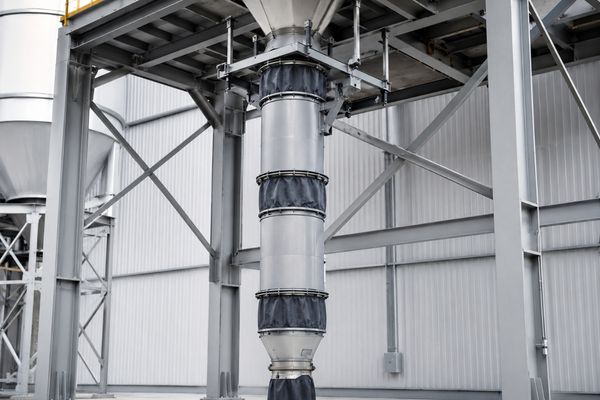
Telescopic Chute

Telescopic Chute

 Allows controlled and adjustable discharge of bulk materials, ensuring precise flow and minimal spillage.

View Details
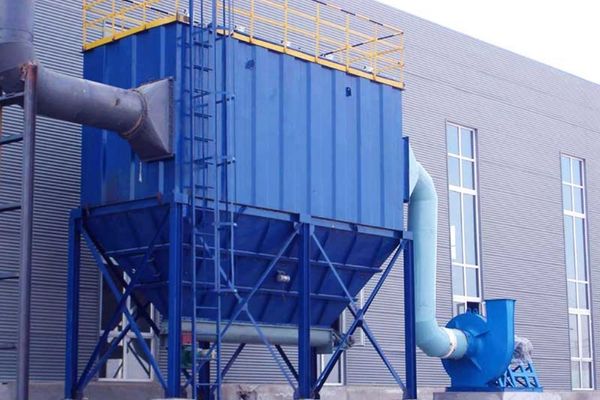
Bag Type Dust Collection System Manufacturer

Dust Collection System

Efficiently captures and removes dust particles from industrial processes, ensuring cleaner air and a safer work environment.

View Details

How Does Pollution Control Equipment Improve Material Handling?

Pollution control equipment works together with the material handling process to reduce the amount of dust escaping into the surrounding plant area. A properly designed system can collect airborne particles at transfer or discharge points and manage them before they spread throughout the facility.

For industries handling fine powders or dusty bulk materials, effective dust control can provide several operational advantages, including better workplace cleanliness, reduced material spillage, improved visibility around equipment, lower housekeeping requirements, and better protection of nearby machinery.

The right pollution-control solution should therefore be considered as part of the overall material handling system rather than as a separate addition after installation.

How to Choose the Right Pollution Control Equipment?

Selecting suitable pollution control equipment depends on the actual process conditions of the plant. Important factors include:

Type of Dust

Particle size, bulk density, moisture, abrasiveness, and material behaviour influence the type of collection system required.

Dust Generation Point

The solution should be designed around where dust is produced, such as loading points, conveyor transfers, crushers, screens, or storage systems.

Airflow Requirement

Correct airflow is important for capturing dust effectively without unnecessarily increasing power consumption.

Plant Layout

Available installation space, duct routing, equipment accessibility, and existing material handling systems should be considered during system design.

Operating Environment

Temperature, humidity, continuous operating hours, material characteristics, and maintenance requirements can affect equipment selection.

Pollution Control Solutions for Different Industries

Pollution-control and dust-handling systems are useful across industries where bulk solids, powders, ash, and granular materials are processed or transferred. Applications can include cement plants, steel plants, chemical processing facilities, boiler plants, food processing units, pharmaceutical facilities, and other bulk material handling operations.

Each industry may face different dust-control challenges. A cement plant may need to control fine cement or clinker dust, while a boiler or ash-handling facility may require dust control around fly ash and fuel transfer points. Selecting the system according to the actual material and process helps achieve more reliable performance.

FAQs – Pollution Control Equipment

How do I choose the right pollution control equipment for my plant?

The right pollution control equipment depends on your dust type, particle size, air volume, process temperature, material characteristics, dust-generation points, plant layout, and operating conditions. Buyers should share these details with the equipment manufacturer so the system can be selected according to the actual industrial application.

Can pollution control equipment be customized for my industrial process?

Yes. Pollution control equipment can be selected or engineered according to plant capacity, material handled, dust concentration, installation space, airflow requirements, transfer points, and process conditions. A customized solution generally provides better dust capture and integrates more effectively with existing material handling equipment.

What information should I provide before requesting a quotation for pollution control equipment?

For an accurate quotation, buyers should provide details such as industry type, material handled, dust characteristics, process capacity, operating temperature, airflow requirement, equipment location, available space, and existing plant layout. Providing drawings or process details can also help in recommending a suitable solution.

Which industries commonly require industrial pollution control equipment?

Pollution control equipment is commonly required in industries handling cement, ash, coal, chemicals, minerals, powders, food materials, pharmaceutical products, and other bulk solids. It can be installed around conveyors, crushers, screens, silos, loading points, transfer stations, and other dust-generating areas.

Where can I buy pollution control equipment in Ahmedabad, Gujarat?

Businesses looking for industrial pollution control equipment in Ahmedabad, Gujarat, or across India can contact Forderin Reich Pvt. Ltd. for suitable dust-control solutions. Buyers can discuss their application, material characteristics, capacity, and plant conditions to identify equipment that fits their operational requirements.

Need a Pollution Control Solution for Your Plant?

Control industrial dust at the source with a solution designed around your material, process, capacity, dust-generation points, and plant layout. Forderin Reich Pvt. Ltd. can help you identify suitable pollution control equipment for cleaner and more efficient bulk material handling operations in Ahmedabad, Gujarat, and across India.