
Industrial Vibratory Screen Manufacturer for Efficient Screening
Efficient material separation is an important part of bulk material handling. Industries dealing with powders, granules, minerals, chemicals, food ingredients, ash, coal and other bulk materials need consistent screening to maintain product quality and protect downstream equipment. This is where an Industrial Vibratory Screen Manufacturer plays an important role.
Forderin Reich Pvt. Ltd. manufactures material handling equipment in Ahmedabad, Gujarat, including vibratory screens, conveyors, bucket elevators, crushers and supporting equipment for industrial applications across India. Its vibratory screens are designed to separate materials according to particle size and help industries maintain more consistent material flow.
What Is an Industrial Vibratory Screen
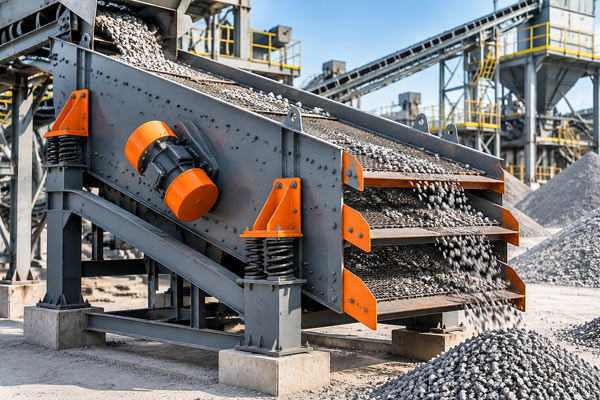
An Industrial Vibratory Screen is a screening machine that uses controlled vibration to separate bulk materials based on particle size.
As material moves across the screening surface, smaller particles pass through the mesh while larger particles remain above it. This separation process can help remove oversized particles, improve product uniformity and prepare material for the next production stage.
Vibratory screens are commonly integrated with conveyors, crushers, hoppers and other bulk handling equipment.
How Does a Vibratory Screen Work
A vibratory screen creates continuous vibration through a drive mechanism. The vibration moves material across the screen surface while allowing particles of the required size to pass through the selected mesh.
Screening performance depends on several factors such as:
- Material particle size | Bulk density | Moisture content | Required screening capacity | Screen opening size | Number of screening decks | Vibration characteristics | Feed rate
Correct selection of these parameters helps achieve more stable screening and consistent material separation.
What Materials Can Be Screened
The suitability of a vibratory screen depends on the physical characteristics of the material.
Industrial screening systems may be used for materials such as:
- Coal | Ash | Limestone | Minerals | Cement raw materials | Chemical powders | Granules | Biomass | Food ingredients | Industrial powders
Before choosing a screen, manufacturers should understand whether the material is dry, moist, abrasive, sticky, dusty or fragile. These characteristics can influence screen design and performance.
Why Is Screening Important in Material Handling
Screening is not only about separating large and small particles. It can also support the overall performance of the production line.
Effective screening can help remove unwanted oversized material before it reaches sensitive equipment. It may also improve product consistency, reduce unnecessary recirculation and support smoother downstream processing.
For example, a screening stage can be positioned after crushing to separate correctly sized material from particles that may require further size reduction.
Forderin Reich includes vibratory screens as part of its wider material handling equipment range for conveying, lifting, crushing, screening and material flow control.
Where Are Industrial Vibratory Screens Used
An Industrial Vibratory Screen Manufacturer in India may provide screening solutions for several industries because particle separation is required across many production processes.
Common applications include cement plants, steel plants, chemical processing, food processing, pharmaceutical operations, boiler related applications and other bulk material handling systems.
Forderin Reich serves industries including cement, steel, chemical, food, pharmaceutical and boiler applications with material handling equipment selected according to material characteristics and operating requirements.
How to Select the Right Industrial Vibratory Screen
Choosing the correct screen starts with understanding the actual application rather than selecting equipment only by machine size.
The required capacity is one of the first considerations. A production line handling a high volume of bulk material may require a larger screening area or a different configuration than a smaller process line.
Particle size distribution is equally important. The screen opening must match the required separation size. Material moisture, abrasiveness, temperature and tendency to clog should also be evaluated.
What Is the Role of Screen Mesh Selection
The screen mesh determines which particle sizes pass through the screening surface.
If the opening is too large, unwanted particles may pass into the finished material. If it is too small, the system may restrict material flow or reduce screening capacity.
Mesh selection should therefore be based on the required output size, material characteristics and desired production rate.
For applications requiring more than one size classification, multi deck screening configurations may be considered.
Why Choose a Custom Vibratory Screen
Standard equipment may not suit every process.
A customized vibratory screen can be developed around plant capacity, material type, available space and downstream equipment. This can be especially useful when the machine needs to be integrated into an existing material handling line.
A reliable Vibratory Screen Manufacturer in Ahmedabad should evaluate feed conditions, required output, dust control needs, maintenance access and plant layout before recommending the equipment.
Forderin Reich provides customized material handling solutions based on plant requirements and operating conditions.
How Vibratory Screens Support Cement Steel and Chemical Plants
In cement plants, screening may be used to classify raw materials and support consistent downstream processing.
In steel and mineral applications, vibratory screens can help separate coal, ore or other bulk materials by size.
Chemical plants may use screening for powders and granules where consistent particle size is important for processing or product quality.
Because every material behaves differently, screen design should be selected according to the specific process rather than using one standard configuration for all industries.
Maintenance Tips for Reliable Screening Performance
Regular maintenance helps keep screening equipment operating consistently.
Operators should inspect screen mesh condition, fasteners, vibration components, bearings and drive assemblies according to the recommended maintenance schedule. Material buildup should also be removed where necessary.
A damaged or blocked screen surface can reduce separation efficiency and affect production capacity.
Preventive inspection can help identify wear before it results in unexpected downtime.
Industrial Vibratory Screen Manufacturer in Ahmedabad
Businesses looking for an Industrial Vibratory Screen Manufacturer in Ahmedabad can consider equipment according to material properties, required capacity and plant configuration.
Forderin Reich Pvt. Ltd. is based in Ahmedabad, Gujarat and manufactures material handling equipment for industries across India. Its equipment portfolio includes vibratory screens along with belt conveyors, screw conveyors, bucket elevators, crushers, rotary airlock valves and knife gate valves.
Conclusion
An industrial vibratory screen plays an important role in improving material classification, removing unwanted particle sizes and maintaining consistent material flow.
Selecting the right equipment requires careful consideration of particle size, capacity, moisture, abrasiveness, screen mesh and plant layout.
As an Industrial Vibratory Screen Manufacturer, Forderin Reich Pvt. Ltd. provides screening and bulk material handling equipment for industrial applications in Ahmedabad, Gujarat and across India. Choosing a screen according to actual process requirements can help industries achieve more reliable and efficient material handling.
Frequently Asked Questions
An industrial vibratory screen separates bulk materials according to particle size using controlled vibration and a screen mesh. It can help remove oversized particles and create more consistent material for downstream processing.
Start with material type, particle size, required capacity, moisture level, abrasiveness and desired separation size. Plant layout and the way the screen connects with feeding and discharge equipment should also be considered.
Yes. The screen can be configured with suitable mesh openings according to the required particle separation. Applications needing multiple size fractions may use more than one screening deck.
Vibratory screens are commonly used in cement, steel, chemical, minerals, food processing, pharmaceutical, boiler and other bulk material handling applications.
Yes. Vibratory screens can form part of a complete material handling line with crushers, conveyors, hoppers, elevators and other process equipment.
Poor performance may result from unsuitable mesh size, excessive feed rate, screen blockage, worn mesh, incorrect vibration conditions or material characteristics that were not considered during equipment selection.
Forderin Reich Pvt. Ltd. manufactures industrial material handling equipment in Ahmedabad, Gujarat, including vibratory screens for screening and bulk material processing applications.