Smart Industrial Belt Conveyors for Energy Efficient Material Handling
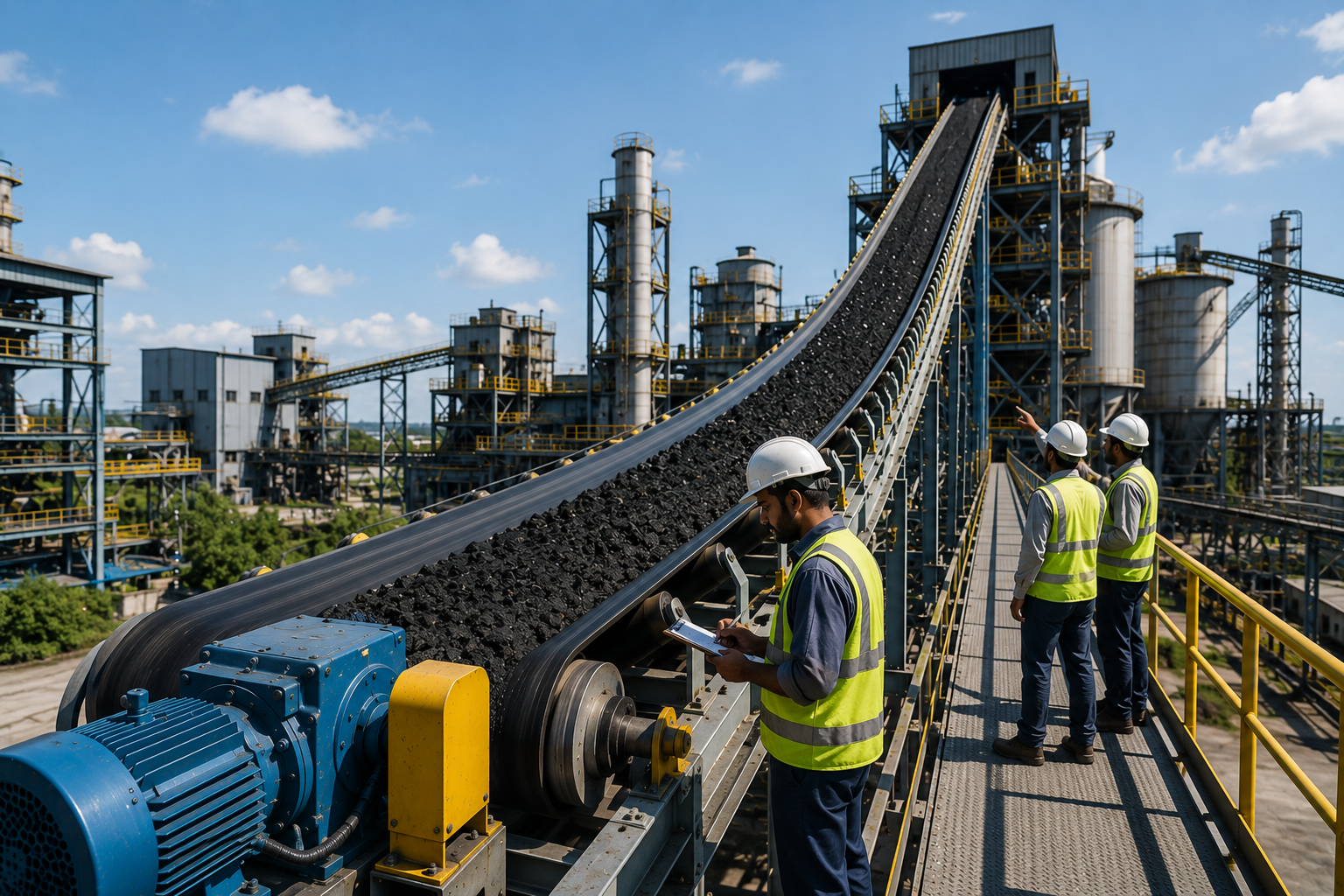
Industrial plants are under growing pressure to move more material while using less energy, reducing downtime and maintaining safer working conditions. Because of this, belt conveyors are changing from simple transport equipment into smarter material handling systems that support efficient plant operations.
For cement plants, steel units, power plants, mines, chemical facilities and other bulk material industries, choosing the right Industrial Belt Conveyor Manufacturer can directly affect productivity and operating costs. A properly engineered conveyor maintains continuous material flow while helping reduce spillage, unnecessary power consumption and unexpected production stoppages.
Today, industries are also looking for conveyors that support automation, variable speed drives, sensors and condition monitoring. These technologies are making energy-efficient and intelligent conveyor systems an important part of modern industrial plants.
Why Smart Industrial Belt Conveyors Are Gaining Attention
Traditional conveyors may continue running at the same speed even when material demand is low. Some systems also operate with worn rollers, incorrect belt tension or poor alignment until these small problems become major breakdowns.
Modern industrial belt conveyors can be designed to monitor important operating conditions such as motor load, belt movement, bearing condition and conveyor speed.
Changes in these operating values can help plant teams notice problems earlier. This is especially useful in plants where conveyors run for long hours and transport heavy, dusty or abrasive bulk materials.
Early identification of problems allows maintenance teams to plan repairs during scheduled shutdowns rather than dealing with sudden production failures.
How an Industrial Belt Conveyor Manufacturer Improves Energy Efficiency
Energy efficiency begins with correct conveyor engineering. An experienced Industrial Belt Conveyor Manufacturer studies the material type, required capacity, conveying distance, elevation and operating hours before selecting motors and drive components.
An oversized motor may consume more power than necessary, while an undersized drive may face repeated overloading.
Properly selected motors, gearboxes, pulleys, bearings and idlers allow the belt to move smoothly with lower mechanical resistance.
Variable Frequency Drives can also improve operating control. They allow conveyor speed to be adjusted according to production demand instead of running at maximum speed all the time.
Correct belt alignment and tension are equally important. Poor alignment increases friction, damages belt edges and increases maintenance requirements.
Predictive Maintenance for Industrial Belt Conveyors
One of the biggest changes in modern manufacturing is the move from breakdown maintenance toward condition-based maintenance.
Instead of waiting for a roller, bearing or drive component to fail completely, plant operators can monitor operating conditions and identify early warning signs.
Smart conveyor monitoring can help detect:
- Belt misalignment
- Belt slippage
- Abnormal motor loads
- Worn or jammed idlers
- Rising bearing temperature
- Material buildup near pulleys
- Irregular conveyor movement
Condition monitoring does not replace regular maintenance. It helps maintenance teams understand where attention is required.
This can reduce unnecessary inspections while allowing critical components to be serviced before they create costly production interruptions.
Better Belt Conveyor Design Means Better Material Flow
Every material behaves differently during conveying. Coal, limestone, clinker, biomass, minerals, grains and chemicals cannot always be handled using the same conveyor configuration.
Material density, lump size, moisture, temperature and abrasiveness influence belt width, conveyor speed, loading arrangement and chute design.
Abrasive products may require stronger belts and wear-resistant liners. Fine or dusty materials may need conveyor covers, side skirts and dust-control systems. Sticky materials may require effective belt cleaners and carefully designed discharge points.
A professional Industrial Belt Conveyor Manufacturer should study these properties before finalising the system.
The objective should not simply be moving material from one location to another. The system should provide controlled flow with minimum material loss, belt wear and housekeeping requirements.
Industrial Belt Conveyor Requirements in Ahmedabad and Gujarat
Ahmedabad and Gujarat have large engineering, chemical, cement, power, food processing and manufacturing sectors. These industries regularly require reliable systems for transporting raw materials between storage, processing and production areas.
Industrial locations around Ahmedabad, Vadodara, Bharuch, Ankleshwar, Surat and Rajkot may require conveyors that can perform reliably in dusty environments, high temperatures, outdoor installations and continuous operating conditions.
Local site conditions are important during conveyor design. Available floor space, loading height, maintenance access and existing equipment connections should be considered before manufacturing begins.
This GEO-focused engineering approach can help industries avoid expensive plant modifications after installation.
Applications of Industrial Belt Conveyor Systems
Belt conveyors are used across many industrial sectors because they can move large quantities of material continuously.
Cement plants use conveyors for limestone, clinker, gypsum and coal. Steel plants require heavy-duty systems for coke, ore and additives. Power plants use them in coal and biomass fuel handling applications.
Mining and aggregate industries use conveyors for high-volume material transport, while chemical and fertilizer plants may require covered or enclosed designs for powders and granules.
Selecting the correct conveyor configuration for each application improves reliability and helps protect the material being transported.
What Should Buyers Check Before Ordering a Belt Conveyor
Providing correct application information helps the manufacturer design a suitable conveyor system.
Before requesting a quotation, buyers should know:
- Material name and bulk density
- Required conveying capacity
- Conveyor length
- Required discharge height
- Horizontal or inclined layout
- Material temperature
- Maximum lump size
- Daily operating hours
- Indoor or outdoor installation
- Dust-control requirements
Buyers should also discuss belt specifications, motor capacity, gearbox selection, guarding, emergency stopping systems and maintenance access.
Why Customized Belt Conveyor Engineering Matters
Industrial plants rarely have identical layouts. Loading points, discharge directions, existing machinery and production capacities are different at every facility.
Customized belt conveyor engineering allows the system to fit the actual plant instead of forcing the plant to fit a standard conveyor.
A customized system can also integrate smoothly with crushers, feeders, hoppers, bucket elevators, vibratory screens, silos and dust collectors.
When all equipment is planned as part of one material handling process, material transfer becomes smoother and production bottlenecks can be reduced.
Conclusion
Industrial belt conveyors are becoming smarter, more energy efficient and easier to monitor. Correct drive selection, proper belt alignment, better transfer-point design and condition monitoring can help industries reduce energy losses, maintenance issues and unplanned downtime.
Choosing an experienced Industrial Belt Conveyor Manufacturer is especially important when equipment must operate continuously in challenging industrial environments.
For industries in Ahmedabad, Gujarat and across India, a properly engineered belt conveyor can support reliable material flow, safer working conditions, better plant productivity and lower long-term operating costs.
Frequently Asked Questions
An Industrial Belt Conveyor Manufacturer designs conveyor systems according to material type, capacity, conveying distance, layout and operating conditions. Customized engineering, installation support and maintenance guidance may also be provided.
Correct motor sizing, efficient rollers, proper belt alignment, suitable tension and variable speed drives can reduce unnecessary power consumption.
Industrial belt conveyors can handle coal, limestone, clinker, biomass, minerals, grains, aggregates, chemicals and many other bulk materials when designed correctly.
Predictive maintenance can identify unusual vibration, temperature, motor load or conveyor behaviour before a major component failure occurs.
Yes. Conveyor covers, side skirts, enclosed transfer points and dust collection systems can be used to control dust and material leakage.
Yes. Conveyor length, width, inclination, loading points, discharge position and drive arrangements can be designed according to existing plant space and equipment.
Buyers should provide material type, capacity, conveyor length, elevation, particle size, material temperature, operating hours and installation conditions.
Cement, steel, power, mining, chemical, fertilizer, food processing and bulk material handling industries commonly use belt conveyor systems for continuous material transportation.