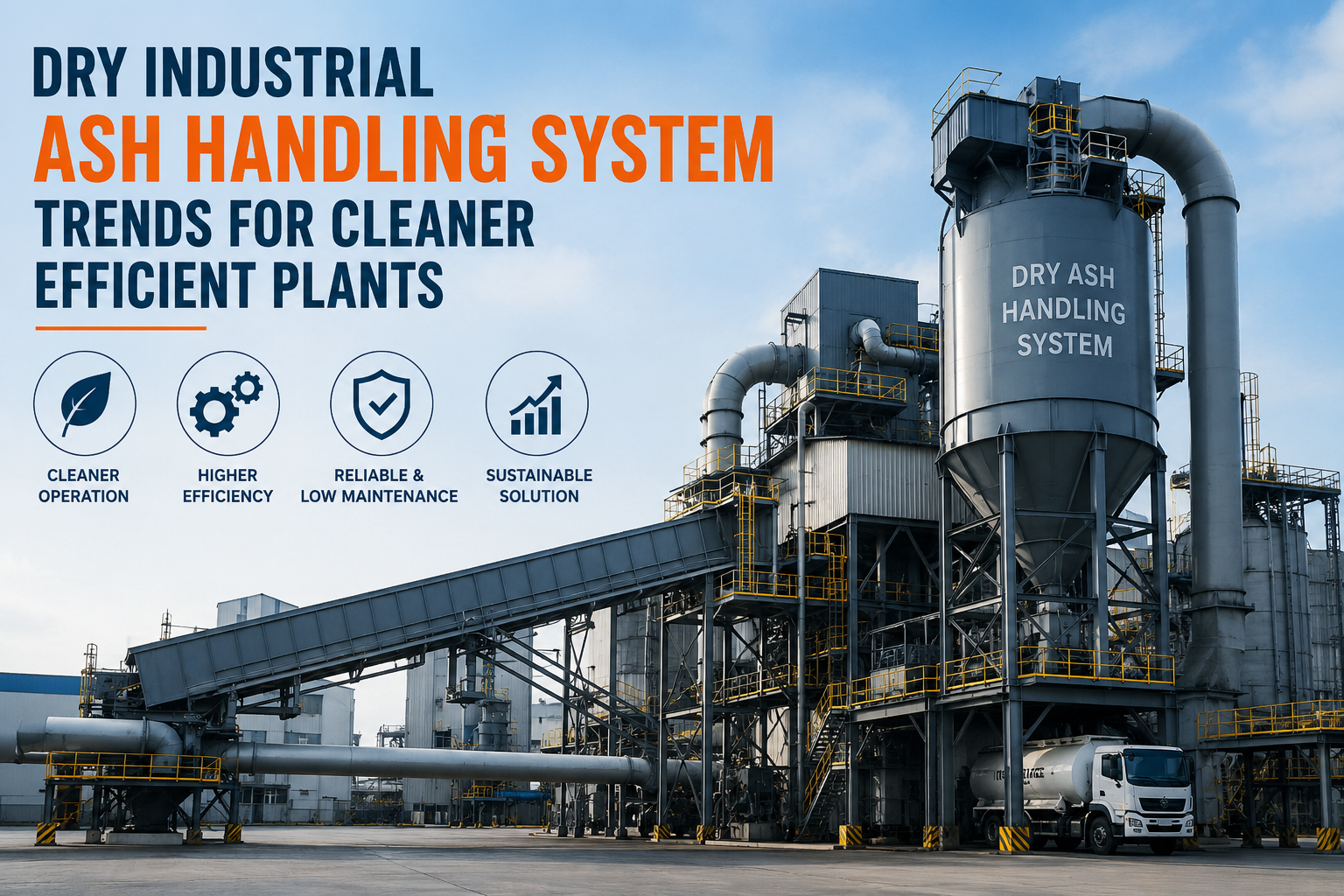
Dry Industrial Ash Handling System Trends for Cleaner Plant Operations
Industrial plants are under growing pressure to control dust, reduce water use, lower operating costs, and find better ways to manage industrial waste. This is making the Industrial Ash Handling System more important than ever. Instead of treating ash only as waste that needs to be removed, modern plants are looking at how ash can be collected, transported, stored, and prepared for possible reuse.
One of the biggest changes is the move toward dry ash handling and enclosed material transfer. Power plants, boiler units, cement plants, steel facilities, and other industries that generate ash want cleaner systems with less manual handling. Modern equipment can help reduce dust leakage, save water, improve workplace safety, and maintain a steady material flow.
This shift is changing the way new ash handling systems are designed and how older plants are upgraded.
Why Is Dry Ash Handling Becoming More Important
Traditional wet ash handling uses water to cool or transport ash. Although this method has been used for many years, it can require large quantities of water and additional infrastructure for slurry handling.
Dry ash handling takes a different approach. Ash is collected and transferred in dry form using pneumatic conveying, screw conveyors, enclosed mechanical conveyors, air slides, or other suitable equipment.
The growing interest in dry systems comes from several practical benefits:
- Lower water consumption
- Easier ash storage
- Reduced slurry management
- Better dust containment
- Improved ash quality for reuse
- Cleaner plant surroundings
- Lower dependence on ash ponds
- Easier material loading and transportation
For industries trying to improve environmental performance, these advantages can make dry handling an attractive option.
How an Industrial Ash Handling System Works
An Industrial Ash Handling System connects different equipment to move ash safely from its generation point to storage, processing, reuse, or disposal.
The exact process depends on the plant and type of ash, but a typical system may follow these steps:
- Ash is collected below boilers, furnaces, filters, or pollution control equipment.
- Feeding equipment controls the amount of ash entering the conveying line.
- Conveyors or pneumatic systems move the ash.
- Dust control equipment prevents fine particles from escaping.
- Ash is transferred into silos, bins, or other storage units.
- The material is discharged for transportation, processing, reuse, or disposal.
Good system design keeps ash movement controlled throughout the process instead of allowing open transfer and manual handling.
Dry Ash Handling Versus Wet Ash Handling
Choosing between dry and wet handling depends on plant conditions, ash characteristics, water availability, capacity, and final ash use.
| Factor | Dry Ash Handling | Wet Ash Handling |
|---|---|---|
| Water Requirement | Low | High |
| Ash Condition | Mostly dry | Slurry form |
| Storage | Silos and bins | Ponds or slurry systems |
| Dust Control | Requires enclosed transfer | Lower dust during slurry transport |
| Ash Reuse | Generally easier | May require drying |
| Water Management | Limited | More complex |
| Plant Cleanliness | High with proper sealing | Depends on slurry management |
| Automation | Easy to integrate | Can also be automated |
There is no single system that suits every plant. The right choice should be based on the actual process instead of selecting equipment only by price.
Pneumatic Conveying Is Changing Ash Transportation
Pneumatic conveying has become an important technology for fine ash, especially where enclosed transportation is required.
The system moves dry material through pipelines using controlled air pressure or vacuum. Since the ash remains inside the pipe, there are fewer open transfer points.
This can provide several advantages:
- Better dust containment
- Flexible pipeline routing
- Reduced material spillage
- Suitable transfer to storage silos
- Less manual intervention
- Easier automation
- Compact installation in limited spaces
However, pneumatic systems must be correctly designed. Pipe diameter, conveying distance, ash particle size, air pressure, bends, and required capacity can all affect performance.
Automation Makes Ash Handling Smarter
Automation is another major trend in modern industrial material handling.
Sensors can monitor silo levels, conveying pressure, motor load, material flow, temperature, and equipment status. PLC-based controls can then manage the operating sequence and alert operators when abnormal conditions appear.
Automation helps plant teams identify problems such as:
- High silo levels
- Conveyor overload
- Blocked pipelines
- Abnormal pressure
- Motor faults
- Poor material flow
Early warning can help maintenance teams act before a small problem turns into an unplanned plant shutdown.
Dust Control Is Now Part of System Design
Fine fly ash can easily become airborne during collection, transfer, storage, and loading. Because of this, dust control should not be treated as a separate issue.
A modern Industrial Ash Handling System can include enclosed conveyors, sealed transfer points, dust collectors, bag filters, rotary airlock valves, flexible connections, and controlled loading systems.
Good dust control improves more than plant appearance. It can help protect workers, reduce material loss, keep nearby machinery cleaner, and support better environmental management.
Special attention should be given to transfer points because these are common locations for dust leakage.
Ash Is Increasingly Viewed as a Reusable Material
One of the most important changes in ash management is the growing focus on utilization rather than simple disposal.
Depending on its properties and applicable standards, fly ash may be used in applications such as:
- Cement manufacturing
- Concrete production
- Bricks and blocks
- Road construction
- Embankment work
- Mine filling
- Land development projects
Keeping ash dry and properly stored can make transportation and further use easier.
This means ash handling equipment can play an important role in creating a smoother connection between ash generation and beneficial use.
How to Select the Right Industrial Ash Handling System
Plants should study operating conditions before choosing equipment.
Important factors include:
Ash Generation Rate
Calculate how much ash is generated per hour and during peak operating conditions.
Type of Ash
Fly ash and bottom ash have different particle sizes, temperatures, and flow characteristics.
Conveying Distance
Short transfer routes may use mechanical conveyors, while certain long or complex routes may benefit from pneumatic conveying.
Ash Temperature
Hot ash may require cooling or equipment designed for elevated temperatures.
Available Space
Plant layout can influence conveyor type, silo location, pipeline routing, and access for maintenance.
Final Use of Ash
A system designed for dry ash reuse may be different from one designed only for disposal.
Maintenance Requirements
Wear parts, bearings, valves, pipelines, filters, and motors should remain easy to inspect and service.
Common Problems That Proper Design Can Prevent
Poor ash handling design can create problems even when good equipment is installed.
Common issues include:
- Ash buildup inside hoppers
- Pipeline blockage
- Excessive conveyor wear
- Dust escaping from joints
- Silo overfilling
- Irregular material discharge
- High energy consumption
- Frequent valve failure
- Difficult maintenance access
A complete system should therefore be designed around ash properties, plant capacity, layout, operating hours, and future expansion plans.
Future of Industrial Ash Handling
The future of ash handling is moving toward cleaner, enclosed, automated, and resource-efficient systems. Industries are increasingly interested in reducing water consumption, controlling fine dust, improving equipment monitoring, and keeping ash suitable for reuse.
Dry conveying, smart controls, reliable storage silos, better dust collection, and automated loading can work together as one integrated system.
For new plants as well as existing facilities planning modernization, choosing the right Industrial Ash Handling System can support cleaner operations, steady production, safer material movement, and better long-term plant performance.
Conclusion
Ash management is no longer only about moving waste away from a boiler or production area. Modern plants need a system that manages ash safely from collection to its final destination.
A properly designed Industrial Ash Handling System can reduce dust, minimize manual handling, save water, improve storage, support ash reuse, and reduce operational interruptions. As industrial plants continue adopting cleaner and more automated processes, dry ash handling and intelligent material transfer are likely to remain important parts of plant modernization.
Frequently Asked Questions
An Industrial Ash Handling System is a combination of equipment used to collect, convey, store, load, reuse, or dispose of ash produced by boilers, furnaces, power plants, and other industrial processes.
Ash handling systems are commonly used in thermal power plants, industrial boiler plants, cement plants, steel plants, waste-to-energy facilities, and other industries where combustion produces ash.
Fly ash contains fine particles carried with flue gases and collected by pollution control equipment. Bottom ash contains heavier particles that settle at the bottom of a boiler or furnace.
Dry ash handling system can reduce water consumption, simplify storage, support enclosed conveying, reduce slurry management, and keep ash in a condition that may be easier to reuse.
Yes. Pneumatic conveying is widely suited to fine dry materials such as fly ash because material can be transported through enclosed pipelines while controlling dust and spillage.
Dust can be controlled with enclosed conveyors, sealed transfer points, bag filters, dust collectors, rotary airlock valves, properly designed silos, and controlled loading equipment.
Depending on ash quality and applicable standards, fly ash can be used in cement, concrete, bricks, blocks, roads, embankments and several other construction applications.
Important factors include ash type, temperature, hourly capacity, conveying distance, plant layout, storage requirement, available space, dust control requirements, final use of ash, and maintenance accessibility.