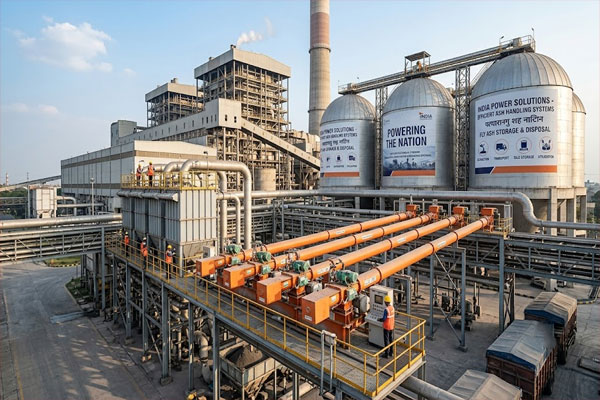
Industrial Ash Handling Systems for Efficient Thermal Plant Operations
Ash is a common by-product of coal, biomass, pet coke and other solid fuels used in boilers and thermal plants. If it is not removed properly, it can cause dust, equipment wear, material buildup and unsafe working conditions. A well-designed Industrial Ash Handling System collects and transfers ash in a controlled manner, helping plants maintain cleaner operations and uninterrupted production.
Industries in Ahmedabad, Gujarat and other manufacturing regions of India use ash handling equipment in power plants, cement units, steel plants, paper mills, chemical facilities and captive boiler houses. The correct system depends on ash temperature, particle size, moisture level, generation capacity and available plant space.
What Is an Industrial Ash Handling System
An Industrial Ash Handling System combines hoppers, conveyors, feeders, valves, grinders, pipelines and storage units to manage ash produced during fuel combustion. It may handle bottom ash, fly ash or both.
Bottom ash is the heavier material that settles below a boiler or furnace. Fly ash is finer and moves with flue gases before being collected through bag filters, cyclones or electrostatic precipitators.
Since both ash types have different physical properties, they require different conveying methods. Mechanical, pneumatic, hydraulic and submerged conveying systems are commonly used depending on temperature, conveying distance, plant capacity and environmental requirements.
Role of a Bottom Ash Handling System Manufacturer
A professional Bottom Ash Handling System Manufacturer designs equipment for collecting hot, coarse and abrasive ash from the lower section of a boiler. Bottom ash may contain clinker, heavy particles and partially burnt fuel, so the equipment must resist heat, impact and continuous wear.
Typical bottom ash equipment includes submerged chain conveyors, drag chain conveyors, clinker grinders, screw conveyors, dewatering units and storage bunkers. These components cool, crush and transfer ash to a collection, reuse or disposal point.
Before finalising the design, the manufacturer should study boiler capacity, ash discharge points, ash temperature and hourly generation. Proper sealing, abrasion-resistant liners and dependable drive systems help increase equipment life.
Role of a Bottom Ash Handling System Manufacturer
A professional Bottom Ash Handling System Manufacturer designs equipment for collecting hot, coarse and abrasive ash from the lower section of a boiler. Bottom ash may contain clinker, heavy particles and partially burnt fuel, so the equipment must resist heat, impact and continuous wear.
Typical bottom ash equipment includes submerged chain conveyors, drag chain conveyors, clinker grinders, screw conveyors, dewatering units and storage bunkers. These components cool, crush and transfer ash to a collection, reuse or disposal point.
Before finalising the design, the manufacturer should study boiler capacity, ash discharge points, ash temperature and hourly generation. Proper sealing, abrasion-resistant liners and dependable drive systems help increase equipment life.
Importance of a Boiler Ash Handling System Manufacturer
A Boiler Ash Handling System Manufacturer provides an integrated solution for ash collected below the furnace, economiser, air preheater and pollution-control equipment. The system must remove ash continuously without affecting boiler efficiency.
When ash remains inside a hopper for too long, it may harden, form bridges or block the discharge outlet. Rotary airlock valves, screw feeders, level sensors and automated control panels help maintain regular material flow.
Larger plants may connect the ash handling equipment with the main boiler control system. Operators can then monitor hopper levels, motor loads, conveyor operation and valve positions from a central control room.
Main Components of Ash Handling Equipment
A complete ash handling arrangement may include:
- Ash collection hoppers
- Drag chain conveyors
- Screw conveyors
- Bucket elevators
- Clinker grinders
- Rotary airlock valves
- Pneumatic conveying pipelines
- Storage silos and bunkers
- Dust collection systems
- Sensors and control panels
Fine fly ash requires enclosed and airtight conveying to prevent dust leakage. Heavy bottom ash needs strong mechanical equipment with heat-resistant and abrasion-resistant construction.
The working process normally starts with ash collection in a hopper. A feeder controls the discharge rate, while a mechanical conveyor or pneumatic pipeline transfers the material to a silo, bunker, dewatering unit or loading point.
Benefits of an Efficient Ash Handling System
A properly engineered Industrial Ash Handling System reduces manual work, ash spillage and worker exposure to airborne dust. It also helps maintain a cleaner and safer boiler area.
Continuous ash removal prevents hopper blockages, overloaded conveyors and unexpected plant shutdowns. Automated feeding and conveying can improve operating reliability while reducing daily maintenance requirements.
Collected ash may also be reused in cement, bricks, blocks, road construction and other approved applications. Controlled storage and loading make ash reuse, transportation and disposal easier.
Choosing the Right System for Ahmedabad and Gujarat Industries
Industrial units in Ahmedabad, Vadodara, Surat, Rajkot and other Gujarat locations commonly use boilers for steam generation, process heating and captive power.
Before selecting a system, plant owners should consider fuel type, ash quantity, transfer distance, discharge height, available utilities and maintenance access. The supplier should provide capacity calculations, equipment drawings, construction materials and safety details.
Outdoor equipment should have suitable weather and corrosion protection. Fine ash transfer points should include enclosed pipelines and dust-control arrangements to reduce environmental impact.
Conclusion
An Industrial Ash Handling System supports clean, safe and uninterrupted boiler operation. It collects bottom ash and fly ash and transfers them through suitable equipment for storage, reuse or disposal.
Selecting an experienced Bottom Ash Handling System Manufacturer is important for managing hot, heavy and abrasive ash. A capable Boiler Ash Handling System Manufacturer can integrate conveyors, hoppers, grinders, valves, silos and automated controls into one coordinated solution.
With proper engineering, suitable equipment and regular maintenance, industries can improve boiler reliability, reduce dust problems and achieve efficient long-term ash management.
Frequently Asked Questions
An Industrial Ash Handling System collects, conveys, processes and stores bottom ash or fly ash generated by boilers, furnaces and thermal plants.
A manufacturer may provide submerged conveyors, drag conveyors, clinker grinders, screw conveyors, ash hoppers, dewatering units and automated control systems.
A boiler ash handling system prevents ash buildup, controls dust, reduces manual handling and supports continuous and efficient boiler operation.
Bottom ash is coarse and settles below the furnace, while fly ash is fine and travels with flue gases before collection.
Submerged chain conveyors, drag conveyors, clinker grinders and water-cooled systems are commonly used according to ash temperature and generation capacity.
Yes. Ash handling systems can be designed according to local plant layouts, boiler capacity, fuel type, available space and operating conditions.
Chains, bearings, seals, liners, motors, valves and sensors should be inspected regularly according to the recommended preventive maintenance schedule.